Showing posts with label photographer. Show all posts
Showing posts with label photographer. Show all posts
Wednesday, August 13, 2008
Assistants Notes: Specialization and Efficiency.
This summary is not available. Please
click here to view the post.

Thursday, July 3, 2008
Practicus In The Studio: The Surroundings Of The Studio.
Previous articles of this series, in which the aim of the writer to communicate items of a long experience in studio portraiture, have appeared weekly since the beginning of the present year. It is not thought possible to continue the series to the length of that by the name writer which ran hrough the "British Journal" some years ago, but if any reader among the younger generation of photographers, and particularly those engaged as assistants, has a particular subject which might be dealt with, his or her suggestion will be welcomed. The subjects of the previous articles of the series have been as follows: -
Studio Exposures (May 24).
Artificial Lighting (June 4).
Printing Processes for Portraiture (June 5).
Studio Accessories and Furniture (June 20).
A Talk About Lighting (June 10).
The Camera and the Lens (June 12).
Managing the Sitter (May 14).
Backgrounds (May 20).
Some writers on lighting in the studio have treated the matter as if all studios were alike, and that a set of rules, which should ensure any desired revolt if they were followed, could be evolved. There could be no greater error, for hardly any two studios are exactly alike; in fact, so great is the difference that an operator who has created quite a reputation for artistic work in one will fail dismally in another. It has been my luck to work in many oddly constructed places, but I have hardly found one where, with a little study and perseverance, decent results could not be obtained, the principal difference being not so mach in the appearance of the negatives as in she length of exposure necessary to obtain then. This, I hope, will be of some comfort to those who have found an otherwise eligible position for a studio, but are doubtful as to its possibilities in the way of lighting.
There are two main points to be considered, one being the orientation of tile building, or its relation to the cardinal points of the compass, and consequently to the sun, and the other the presence of outside obstructions in the shape of walls, trees, or other objects. Regarding the first, I think that too much stress has been laid upon the necessity for a northern aspect for the glass side; in fact, I have known cases where a photographer has gone to great trouble and expense to secure this or even to reject a position where it could not be obtained. For instance, where it has been a choice between securing a good working length with in eastern aspect or too short s studio for good work, the latter has been chosen, simply from fear of not being able to control the light in the former position. This idea dates back to wet-collodion days, when it was considered essential to have a large amount of open light, and has been handed down from one writer to another, although we must not forget that even in those early days Mr. Valentine Blanchard, whose artistic ability has never been questioned, proved that the finest possible work could be done all the year round in a studio facing due south. I frequently work in a studio with a full western aspect, and find no difficulty in doing so, although I must confess that I should like it muoh better if it were a northern one. The reason for this is, of course, that in the latter one can get the same effect all day without altering the blinds, while in the former modifications are necessary as the light works round.
To make the best of a studio so situated that the sun shines upon the glass, it is necessary to be able to coyer the whole of the light either with dark or white blinds or curtains as my be needed, but when I say white blinds I do not mean pea-soup colour, which is the normal tint in many studios. These intercept so much light that they are useless as diffusers, which is their real mission. Mr. Blanchard screened his sunlit roof and side with light frames, upon which tissue paper was stretched; but I prefer my favourite white nainsook festoon curtains, as they may be easily pushed aside when not required, end are, moreover, easily washed when soiled. I have worked in a studio glazed with ground glass, but found that there was too much glare, and when white blinds were used in addition the exposures were too long. It is almost needless to say that in a sunlit studio there must be no bare glass, the white blinds being the source of light, when they act much in the same way as if a sky covered with white clouds were seen through dear glass. The simile is, perhaps, not quite good, but that is as nearly as I can put it. In such a studio the inside walls must be rather dark or flatness will result, and the area of white blind used must be no larger than is necessary. If we consider the ease with which good results can be obtained with a single enclosed arc lamp we shall see that a very large area of light is not necessary.
The second point that of outside obstructions is a more difficult one and every individual case must be dealt with as a special problem. During the past few weeks I have had to deal with two cases in which the trouble arose from the proximity of a high wall a few feet from the side light. In the worst one the wall was higher than the studio, and about nine feet away. It was of dark brick and how the previous occupant of the studio, for whom it was built, managed I cannot imagine. His work was certainly unorthodox, and he abandoned photography for the stage. Then during an interval it was occupied as a workshop, until its excellent business position attracted another photographer who decided to take the chance. The first thing to be done was to visit the owner of the wall and to ask his permission, to have it painted white; this he gave readily enough, and the next to stipple the side light halfway up with very thin zinc white paint. The necessary dark and white blinds were fitted, and even in this dull weather the results obtained are excellent, although, of course, the exposures are not quite as rapid as they would be in a more open position.
Another studio was even in a worse situation, being located at the bottom of a deep well-hole surrounded by lofty houses. Before it was built I went on to the leads on which it was to stand, and certainly felt some misgivings; still it was there or nowhere, and as the prospective user was a wealthy man we decided to take the risk. There was toplight, and not too much of that, but, with the help of outside silvered reflectors, lighting was quite passable, and many excellent portraits taken in it. All cases are not as bad as this, but there are often obstructions which seriously reduce the value of a studio. Once I built a studio in a garden in the winter, and it was very satisfactory, but what a difference when the leaves came on the trees again! Fortunately, most were on my own ground, and were drastically lopped, and my next-door neighbor helped, bf cutting in one or two which still troubled me. It is wonderful what you can get done if you talk nicely to people. Here, again, I found that stippling the side light was an improvement, as light which would be nearly vertical is intercepted and dispersed in all directions. If rolled plate be used in such circumstances, there is a great gain in light if the ribs be placed horizontally in the side light; every rib becomes a little cylindrical lens, and throws light into the studio.
In the case of an immovable obstruction which is very near the proposed studio, it is advisable if possible to raise the building, so that it will overlook the obstacle. A friend who found himself in this difficulty said afterwards that it proved a blessing in disguise, for he had to provide himself with an excellent workroom upon which the glasshouse was built, and he found this much more comfortable than the cramped quarters he had proposed using, and the extra cost was not great considering the value of the accommodation provided.
When building or adapting a studio care should be taken to avoid minor obstructions caused by portions of the building itself; for example, I have seen a single slant studio in which the slant was obtained by throwing back the top behind the general line of the building, thus leaving a triangular piece of wall standing out at each end. This may not be serious in many oases, but if a front lighting is wanted it considerably curtails it, and this is more especially so when the studio is rather a short one, as the angle of light is then necessarily more acute. Great caution must be exercised in erecting a studio near vacant land, as there is no guarantee that another building will not be erected that will shut the light completely out. In order to secure the right to do this, a landowner will often erect a screen on poles so as to block any window on neighboring land in order to prevent any subsequent claim to "ancient lights."
It is easy to realise that different situations call for differently designed studios. In the commonest case of difficulty, where there is top light only, it is desirable to have as long; a range of glass in the roof as possible, as we can them draw the blinds well over the sitter's head, turn him slightly away from the light, and get the effect of a high side light; such a studio should be built as wide as possible for this reason.
Studios of moderate height with side light only do not, perhaps, come within our scope, but as they, in common with those with top light only, are capable of being improved by the addition of a supplementary artificial light, we mention, them. A top light may easily be produced under an opaque ceiling by using either the half-watt or an enclosed arc lamp in a metal reflector, which gives a strong though soft reflected light from the ceiling, while similar lamps may be used either to illuminate a white side wall or to give a direct side light through a diffuser. The mixture of lights is not at all objectionable, and, in fact, will hardly be noticed by many sitters.
Difficulties in lighting will be minimized if the studio be wide enough to allow of considerable latitude in the placing of the sitter; it should be possible to work diagonally or evens quite across the studio, and it should always be arranged, if possible, that either end of the studio can be used.
When inspecting an empty studio or the site- for building one, a very simple way of judging of its possibilities is to seat oneself in the position likely to be occupied by the sitter, and from there to note how much clear sky is visible, and the nature of any obstructions. This gives a good starting-point, and is better than attempting to judge the lighting, at all events, in the open air.
PRACTICUS.
Studio Exposures (May 24).
Artificial Lighting (June 4).
Printing Processes for Portraiture (June 5).
Studio Accessories and Furniture (June 20).
A Talk About Lighting (June 10).
The Camera and the Lens (June 12).
Managing the Sitter (May 14).
Backgrounds (May 20).
Some writers on lighting in the studio have treated the matter as if all studios were alike, and that a set of rules, which should ensure any desired revolt if they were followed, could be evolved. There could be no greater error, for hardly any two studios are exactly alike; in fact, so great is the difference that an operator who has created quite a reputation for artistic work in one will fail dismally in another. It has been my luck to work in many oddly constructed places, but I have hardly found one where, with a little study and perseverance, decent results could not be obtained, the principal difference being not so mach in the appearance of the negatives as in she length of exposure necessary to obtain then. This, I hope, will be of some comfort to those who have found an otherwise eligible position for a studio, but are doubtful as to its possibilities in the way of lighting.
There are two main points to be considered, one being the orientation of tile building, or its relation to the cardinal points of the compass, and consequently to the sun, and the other the presence of outside obstructions in the shape of walls, trees, or other objects. Regarding the first, I think that too much stress has been laid upon the necessity for a northern aspect for the glass side; in fact, I have known cases where a photographer has gone to great trouble and expense to secure this or even to reject a position where it could not be obtained. For instance, where it has been a choice between securing a good working length with in eastern aspect or too short s studio for good work, the latter has been chosen, simply from fear of not being able to control the light in the former position. This idea dates back to wet-collodion days, when it was considered essential to have a large amount of open light, and has been handed down from one writer to another, although we must not forget that even in those early days Mr. Valentine Blanchard, whose artistic ability has never been questioned, proved that the finest possible work could be done all the year round in a studio facing due south. I frequently work in a studio with a full western aspect, and find no difficulty in doing so, although I must confess that I should like it muoh better if it were a northern one. The reason for this is, of course, that in the latter one can get the same effect all day without altering the blinds, while in the former modifications are necessary as the light works round.
To make the best of a studio so situated that the sun shines upon the glass, it is necessary to be able to coyer the whole of the light either with dark or white blinds or curtains as my be needed, but when I say white blinds I do not mean pea-soup colour, which is the normal tint in many studios. These intercept so much light that they are useless as diffusers, which is their real mission. Mr. Blanchard screened his sunlit roof and side with light frames, upon which tissue paper was stretched; but I prefer my favourite white nainsook festoon curtains, as they may be easily pushed aside when not required, end are, moreover, easily washed when soiled. I have worked in a studio glazed with ground glass, but found that there was too much glare, and when white blinds were used in addition the exposures were too long. It is almost needless to say that in a sunlit studio there must be no bare glass, the white blinds being the source of light, when they act much in the same way as if a sky covered with white clouds were seen through dear glass. The simile is, perhaps, not quite good, but that is as nearly as I can put it. In such a studio the inside walls must be rather dark or flatness will result, and the area of white blind used must be no larger than is necessary. If we consider the ease with which good results can be obtained with a single enclosed arc lamp we shall see that a very large area of light is not necessary.
The second point that of outside obstructions is a more difficult one and every individual case must be dealt with as a special problem. During the past few weeks I have had to deal with two cases in which the trouble arose from the proximity of a high wall a few feet from the side light. In the worst one the wall was higher than the studio, and about nine feet away. It was of dark brick and how the previous occupant of the studio, for whom it was built, managed I cannot imagine. His work was certainly unorthodox, and he abandoned photography for the stage. Then during an interval it was occupied as a workshop, until its excellent business position attracted another photographer who decided to take the chance. The first thing to be done was to visit the owner of the wall and to ask his permission, to have it painted white; this he gave readily enough, and the next to stipple the side light halfway up with very thin zinc white paint. The necessary dark and white blinds were fitted, and even in this dull weather the results obtained are excellent, although, of course, the exposures are not quite as rapid as they would be in a more open position.
Another studio was even in a worse situation, being located at the bottom of a deep well-hole surrounded by lofty houses. Before it was built I went on to the leads on which it was to stand, and certainly felt some misgivings; still it was there or nowhere, and as the prospective user was a wealthy man we decided to take the risk. There was toplight, and not too much of that, but, with the help of outside silvered reflectors, lighting was quite passable, and many excellent portraits taken in it. All cases are not as bad as this, but there are often obstructions which seriously reduce the value of a studio. Once I built a studio in a garden in the winter, and it was very satisfactory, but what a difference when the leaves came on the trees again! Fortunately, most were on my own ground, and were drastically lopped, and my next-door neighbor helped, bf cutting in one or two which still troubled me. It is wonderful what you can get done if you talk nicely to people. Here, again, I found that stippling the side light was an improvement, as light which would be nearly vertical is intercepted and dispersed in all directions. If rolled plate be used in such circumstances, there is a great gain in light if the ribs be placed horizontally in the side light; every rib becomes a little cylindrical lens, and throws light into the studio.
In the case of an immovable obstruction which is very near the proposed studio, it is advisable if possible to raise the building, so that it will overlook the obstacle. A friend who found himself in this difficulty said afterwards that it proved a blessing in disguise, for he had to provide himself with an excellent workroom upon which the glasshouse was built, and he found this much more comfortable than the cramped quarters he had proposed using, and the extra cost was not great considering the value of the accommodation provided.
When building or adapting a studio care should be taken to avoid minor obstructions caused by portions of the building itself; for example, I have seen a single slant studio in which the slant was obtained by throwing back the top behind the general line of the building, thus leaving a triangular piece of wall standing out at each end. This may not be serious in many oases, but if a front lighting is wanted it considerably curtails it, and this is more especially so when the studio is rather a short one, as the angle of light is then necessarily more acute. Great caution must be exercised in erecting a studio near vacant land, as there is no guarantee that another building will not be erected that will shut the light completely out. In order to secure the right to do this, a landowner will often erect a screen on poles so as to block any window on neighboring land in order to prevent any subsequent claim to "ancient lights."
It is easy to realise that different situations call for differently designed studios. In the commonest case of difficulty, where there is top light only, it is desirable to have as long; a range of glass in the roof as possible, as we can them draw the blinds well over the sitter's head, turn him slightly away from the light, and get the effect of a high side light; such a studio should be built as wide as possible for this reason.
Studios of moderate height with side light only do not, perhaps, come within our scope, but as they, in common with those with top light only, are capable of being improved by the addition of a supplementary artificial light, we mention, them. A top light may easily be produced under an opaque ceiling by using either the half-watt or an enclosed arc lamp in a metal reflector, which gives a strong though soft reflected light from the ceiling, while similar lamps may be used either to illuminate a white side wall or to give a direct side light through a diffuser. The mixture of lights is not at all objectionable, and, in fact, will hardly be noticed by many sitters.
Difficulties in lighting will be minimized if the studio be wide enough to allow of considerable latitude in the placing of the sitter; it should be possible to work diagonally or evens quite across the studio, and it should always be arranged, if possible, that either end of the studio can be used.
When inspecting an empty studio or the site- for building one, a very simple way of judging of its possibilities is to seat oneself in the position likely to be occupied by the sitter, and from there to note how much clear sky is visible, and the nature of any obstructions. This gives a good starting-point, and is better than attempting to judge the lighting, at all events, in the open air.
PRACTICUS.
Thursday, June 26, 2008
Assistants' Notes: Sight and the Photographer.
Sight and the Photographer.
IT goes without saying that sight is the most important bodily function from a photographic point of view. One might imagine an armless, legless, deaf or dumb person performing some job or other connected with the business, and even one with deficiency of intellect might posses some little photographic skill, bat a blind photographer is impossible.
It follows that a photographer's eyes, good or bad, should not be neglected, but accorded at least a modicum of intelligent consideration. A good many pros. hold the belief that the practice of their craft is in itself sufficient ultimately to damage the sight, and judging by the number of workers one meets whose eyes are not so good as they might be, the belief seems reasonable. On the other hand, there are craftsmen of ripe age whose sight is still perfect in spite of yean of hard work. The fact is that photography can – not must – damage or even destroy the sight of anyone engaged at it, the damage usually being brought about by circumstances many of which are in themselves inconspicuous and therefore unsuspected.
These circumstances depend on the nature of the work, each branch of the business having its own peculiar sources of possible eye strain. In the studio the eye may suffer from constant straining at a too thick or coarse focusing screen, or focusing with the lens stopped down. This is a small thing, but in a very busy shop when the operator may be behind the camera for bourn at a stretch, the strain will tell. Where roach focusing has to be done, as much light as passable should be allowed through lens and screen, and the work done smartly. Indecision ceases strain, and does not improve the final definition of the picture.
The continual itching from abort to long focus, occasioned by looking first at the sitter and than at the screen, may tire an eye but if the eyes (and the general health also) are this should prove more of an exercise than a strain.
Working with artificial light, an operator may damage his sight by allowing the light to fall directly on his face too often; in other words, by looking long or often at the lamp. Continual witching on and off from full light to semi-darkness, as also going in and oat between studio and plate-changing room, will leave its mark on the sight if carried on to a great extent. The moral here is to keep a fair amount of light in the studio all the time, and have an assistant changing. The latter can keep his or her gaze away from the bright end of the studio without any trouble.
In the dark-room the red or yellow lamp is often blamed for tired or failing eyes. This is not strictly right, though the position and strength of the coloured light is very often to blame. A lamp should never be in a position to sand direct light into the eye when working, and for this reason a hanging lamp, shedding all its light downwards, is to be recommended. The strength of the light should be as great as the sensitive materials will permit. With regard to the printing room, I would say to those who can please themselves: Discard bromide for gaslight, have as much light as you would in your drawing-room, and be comfortable.
Where yellow or red light is compulsory all walls should be painted vary light: it will obviate much eyestrain in groping about for things which are invisible.
With printing and retouching direct light is mostly used, but in neither case does it – so far as my experience and observation go hart the eye to the same extent as in the case of the dark-room lamp. The difference is this: in one case the eye is working with the image supplied by the direct light and nothing else, in the other the direct rays are worrying the eye and distracting it from its work. This can continue for a long time without the victim being aware of it, even though the eyes and the work may be suffering.
For retouching, the use of direct light, however, is not compulsory; many workers prefer to work against a white or tinted reflector, and one retoucher I know claims that this practice is repairable for his sight being as good as it was twenty years ago. Retouching with weak light, particularly if the negative is yellow or dense ceases eye strain, while the remarks on dark-room lamps apply also to extraneous light near a retouching desk. Working on very small beads is apt to be trying, and for this a magnifier may lessen the strain, bat it should not be used habitually, otherwise it may become an indispensable crutch.
Spotting and working-up require sight that if perfectly free from automation, and when done by anyone whose sight is not normal, and not corrected by glasses, this work will greatly aggravate the weakness. At the slightest sign of strain the lighting conditions should be examined, and if not at fault astigmatism should be needed and the eyes tested. Spectacles, however, are not likely to cure bad light; they will correct the vision and so do away with strain, but that is all.
Before going any further it may be as well to say that this article does not pretend to deal with its subject from any but a purely photographic standpoint. The many defects of vision caused by such things as nerves, bad blood, cigarettes, etc., are not within my scope, and when a photographer's eyes give trouble it rests with him or his doctor to decide whether his craft is to blame or not; it is always possible that some outside influence is causing the mischief. At the same time, a few remarks on the care of the sight may not be out of place. Tired or overworked eyes can be benefited by bathing, and any chemist will make up an eye-bath cheaply. The simplest and safest of these is boric acid.
Sight can be greatly improved by country walking, particularly in districts where long clear views prevail. In my own experience I find nothing to equal daily gazing at landscape the foreground of which is mostly green, with distant planes stretching to far off mountains. Unfortunately, we cannot always enjoy this kind of cure for tired eyes, but in any case and at all times it pays a photographer to care for his eyes, even if it means a little extra trouble. This applies particularly to young workers. In the vigor of youth details are not so readily noticed as they are in alter years, and a young enthusiast may go on working in conditions which are bad for the sight without worrying until the mischief is done. Years after it may cost a good deal to undo what a little forethought could have prevented. – THERMIT.
IT goes without saying that sight is the most important bodily function from a photographic point of view. One might imagine an armless, legless, deaf or dumb person performing some job or other connected with the business, and even one with deficiency of intellect might posses some little photographic skill, bat a blind photographer is impossible.
It follows that a photographer's eyes, good or bad, should not be neglected, but accorded at least a modicum of intelligent consideration. A good many pros. hold the belief that the practice of their craft is in itself sufficient ultimately to damage the sight, and judging by the number of workers one meets whose eyes are not so good as they might be, the belief seems reasonable. On the other hand, there are craftsmen of ripe age whose sight is still perfect in spite of yean of hard work. The fact is that photography can – not must – damage or even destroy the sight of anyone engaged at it, the damage usually being brought about by circumstances many of which are in themselves inconspicuous and therefore unsuspected.
These circumstances depend on the nature of the work, each branch of the business having its own peculiar sources of possible eye strain. In the studio the eye may suffer from constant straining at a too thick or coarse focusing screen, or focusing with the lens stopped down. This is a small thing, but in a very busy shop when the operator may be behind the camera for bourn at a stretch, the strain will tell. Where roach focusing has to be done, as much light as passable should be allowed through lens and screen, and the work done smartly. Indecision ceases strain, and does not improve the final definition of the picture.
The continual itching from abort to long focus, occasioned by looking first at the sitter and than at the screen, may tire an eye but if the eyes (and the general health also) are this should prove more of an exercise than a strain.
Working with artificial light, an operator may damage his sight by allowing the light to fall directly on his face too often; in other words, by looking long or often at the lamp. Continual witching on and off from full light to semi-darkness, as also going in and oat between studio and plate-changing room, will leave its mark on the sight if carried on to a great extent. The moral here is to keep a fair amount of light in the studio all the time, and have an assistant changing. The latter can keep his or her gaze away from the bright end of the studio without any trouble.
In the dark-room the red or yellow lamp is often blamed for tired or failing eyes. This is not strictly right, though the position and strength of the coloured light is very often to blame. A lamp should never be in a position to sand direct light into the eye when working, and for this reason a hanging lamp, shedding all its light downwards, is to be recommended. The strength of the light should be as great as the sensitive materials will permit. With regard to the printing room, I would say to those who can please themselves: Discard bromide for gaslight, have as much light as you would in your drawing-room, and be comfortable.
Where yellow or red light is compulsory all walls should be painted vary light: it will obviate much eyestrain in groping about for things which are invisible.
With printing and retouching direct light is mostly used, but in neither case does it – so far as my experience and observation go hart the eye to the same extent as in the case of the dark-room lamp. The difference is this: in one case the eye is working with the image supplied by the direct light and nothing else, in the other the direct rays are worrying the eye and distracting it from its work. This can continue for a long time without the victim being aware of it, even though the eyes and the work may be suffering.
For retouching, the use of direct light, however, is not compulsory; many workers prefer to work against a white or tinted reflector, and one retoucher I know claims that this practice is repairable for his sight being as good as it was twenty years ago. Retouching with weak light, particularly if the negative is yellow or dense ceases eye strain, while the remarks on dark-room lamps apply also to extraneous light near a retouching desk. Working on very small beads is apt to be trying, and for this a magnifier may lessen the strain, bat it should not be used habitually, otherwise it may become an indispensable crutch.
Spotting and working-up require sight that if perfectly free from automation, and when done by anyone whose sight is not normal, and not corrected by glasses, this work will greatly aggravate the weakness. At the slightest sign of strain the lighting conditions should be examined, and if not at fault astigmatism should be needed and the eyes tested. Spectacles, however, are not likely to cure bad light; they will correct the vision and so do away with strain, but that is all.
Before going any further it may be as well to say that this article does not pretend to deal with its subject from any but a purely photographic standpoint. The many defects of vision caused by such things as nerves, bad blood, cigarettes, etc., are not within my scope, and when a photographer's eyes give trouble it rests with him or his doctor to decide whether his craft is to blame or not; it is always possible that some outside influence is causing the mischief. At the same time, a few remarks on the care of the sight may not be out of place. Tired or overworked eyes can be benefited by bathing, and any chemist will make up an eye-bath cheaply. The simplest and safest of these is boric acid.
Sight can be greatly improved by country walking, particularly in districts where long clear views prevail. In my own experience I find nothing to equal daily gazing at landscape the foreground of which is mostly green, with distant planes stretching to far off mountains. Unfortunately, we cannot always enjoy this kind of cure for tired eyes, but in any case and at all times it pays a photographer to care for his eyes, even if it means a little extra trouble. This applies particularly to young workers. In the vigor of youth details are not so readily noticed as they are in alter years, and a young enthusiast may go on working in conditions which are bad for the sight without worrying until the mischief is done. Years after it may cost a good deal to undo what a little forethought could have prevented. – THERMIT.
Sunday, May 25, 2008
DARK-SLIDES OUT OF REGISTER
DARK-SLIDES OUT OF REGISTER.
In three out of four studios that I have visited in the course of the last year or so, I found the dark slides of the camera in general use out of register with the focusing screen. The present use of rapid plates enables the photographer to use diaphragms to an extent that disguises considerably the want of fine definition, resulting from the plate not being truly in focus. In the days of wet collodion, when, in order to secure a portrait free from the unsharpness, due to movement of the sitter, it was the custom to use the lens at full aperture or nearly so, photographers had to be, and were, careful to see that their dark-slides were truly in register with the focusing screen.
Although the want of sharpness in the negative, due to the slides not being in true register is less conspicuous when using the smaller apertures to which the use of rapid plates has accustomed us, it is still very desirable that the coincidence of position of the plate and the focusing screen should be as complete as possible, if only for the power obtained to get properly exposed results with the shortest exposures, particularly in the case of portraits of children. A photographer, the proprietor of a high-class establishment, doing a large business, writes me that since the correction of his slides his operator generally takes portraits of children with the open lens with excellent results, and with fewer failures and continent economy of time and plates.
The plan which I employ to ascertain the truth, or want of it, of the registry of the slides, is to take a strip of wood about 3/5 or ½ an inch in thickness, rather longer than the width of the slide, and to drive a screw through it. The strip is laid across the front of the frame of the focusing screen, and the screw advanced until the point just touches the screen itself. A plate is now put in the dark-slide, the back is buttoned down, and the shutter is drawn. The strip is then laid across the front of the slide, and if it is in true register, the screw point will just touch the plate. It is desirable to repeat this trial with the plate placed both vertically and horizontally, and with each carrier that may be in use with the slide. A waste negative ix better than a plain glass for the purpose, as a paint scratch on the will indicate very closely coincidence of the two surfaces.
The reason for having the wood a little longer than the width of the slide is (as I have found in one or two cases) that the top or bottom or one of the sides may be higher or lower than the opposite and the extra length of the wood allows the screw to be tried on different paris of the plate. The (crew is inserted at the place where it will come over the middle of the screen when one of the ends of the wood is just at the outer edge of the frame. This arrangement allows full use to l made of the extra length of wood for the testing the truth of adjustment away from the centre of the screen. The extent of deviation from coincidence is ascertained by placing slips of card of different thicknesses between the point of the screw and the focusing screen, or the plate as the case may be, until piece is found of a thickness that just fills the space.
If it is the focusing screen that is found to be nearer to the front than the plate, a cardboard matt is rut of the same size outside as the ground glass; about a quarter of an inch wide all round except at the corners, where it is rounded inside for strength. A photographer generally has a stock of old mounts of various thicknesses, but if there is not one of just the thickness required, one or more thicknesses of cartridge paper may be pasted on to a thinner card, and when dry used for the purpose. The card matt is dropped into the frame, and the glass replaced and the slip-beading pinned in gain.
If it ia the plate that is too near the front, slips of card are glued on all round to the rabbet of the dark-slide. It may be that some of the carriers may require adjustment independent of what has been done to the dark-slides. In this case they may be trued by gluing slips of card along the edges or the front, or, if the error is in the other direction, by reducing the thickness of the wood in the same place.
Of course, a neater job may be made by sending the slide and frame of the focusing screen to a camera maker or to an intelligent cabinet maker, if (which is not often the case) the camera can be put out of use for the time, but the home cure method described has answered perfectly well.
W. E. DEBENHAM.
In three out of four studios that I have visited in the course of the last year or so, I found the dark slides of the camera in general use out of register with the focusing screen. The present use of rapid plates enables the photographer to use diaphragms to an extent that disguises considerably the want of fine definition, resulting from the plate not being truly in focus. In the days of wet collodion, when, in order to secure a portrait free from the unsharpness, due to movement of the sitter, it was the custom to use the lens at full aperture or nearly so, photographers had to be, and were, careful to see that their dark-slides were truly in register with the focusing screen.
Although the want of sharpness in the negative, due to the slides not being in true register is less conspicuous when using the smaller apertures to which the use of rapid plates has accustomed us, it is still very desirable that the coincidence of position of the plate and the focusing screen should be as complete as possible, if only for the power obtained to get properly exposed results with the shortest exposures, particularly in the case of portraits of children. A photographer, the proprietor of a high-class establishment, doing a large business, writes me that since the correction of his slides his operator generally takes portraits of children with the open lens with excellent results, and with fewer failures and continent economy of time and plates.
The plan which I employ to ascertain the truth, or want of it, of the registry of the slides, is to take a strip of wood about 3/5 or ½ an inch in thickness, rather longer than the width of the slide, and to drive a screw through it. The strip is laid across the front of the frame of the focusing screen, and the screw advanced until the point just touches the screen itself. A plate is now put in the dark-slide, the back is buttoned down, and the shutter is drawn. The strip is then laid across the front of the slide, and if it is in true register, the screw point will just touch the plate. It is desirable to repeat this trial with the plate placed both vertically and horizontally, and with each carrier that may be in use with the slide. A waste negative ix better than a plain glass for the purpose, as a paint scratch on the will indicate very closely coincidence of the two surfaces.
The reason for having the wood a little longer than the width of the slide is (as I have found in one or two cases) that the top or bottom or one of the sides may be higher or lower than the opposite and the extra length of the wood allows the screw to be tried on different paris of the plate. The (crew is inserted at the place where it will come over the middle of the screen when one of the ends of the wood is just at the outer edge of the frame. This arrangement allows full use to l made of the extra length of wood for the testing the truth of adjustment away from the centre of the screen. The extent of deviation from coincidence is ascertained by placing slips of card of different thicknesses between the point of the screw and the focusing screen, or the plate as the case may be, until piece is found of a thickness that just fills the space.
If it is the focusing screen that is found to be nearer to the front than the plate, a cardboard matt is rut of the same size outside as the ground glass; about a quarter of an inch wide all round except at the corners, where it is rounded inside for strength. A photographer generally has a stock of old mounts of various thicknesses, but if there is not one of just the thickness required, one or more thicknesses of cartridge paper may be pasted on to a thinner card, and when dry used for the purpose. The card matt is dropped into the frame, and the glass replaced and the slip-beading pinned in gain.
If it ia the plate that is too near the front, slips of card are glued on all round to the rabbet of the dark-slide. It may be that some of the carriers may require adjustment independent of what has been done to the dark-slides. In this case they may be trued by gluing slips of card along the edges or the front, or, if the error is in the other direction, by reducing the thickness of the wood in the same place.
Of course, a neater job may be made by sending the slide and frame of the focusing screen to a camera maker or to an intelligent cabinet maker, if (which is not often the case) the camera can be put out of use for the time, but the home cure method described has answered perfectly well.
W. E. DEBENHAM.
Tuesday, November 6, 2007
Find a Subject (Photography Tips)
As a amateur photographer or professional photographer you are not going to be successful unless you have subjects to shoot. After all, the subject is what will make or break your work. Luckily, it is easy to find photo subjects that you can work with. After all, almost everything around you can be a subject for your next photography. This includes everything from people to landscape to pets to lifeless objects. The photo subjects that you deal with are up to you.
Most photographers like to focus on one kind of subject so that they can become an specialist in that area. Early on you should decide what you like to shoot, and then stick to that subject for a while. The best way to determine what photography subject is best for you is to try out each one. After you shoot everything from people to pets you will have a best idea of what you want to focus on.
Now that you know what photo subjects interest you, head out and find scenes that suit your needs. If you are going to focus on scenery photography you should be able to find much work by simply stepping out of your home. Does it get any easier than that? People who like to shoot subjects such as people and pets may find it a bit more difficult to find subjects. But if you keep your eyes open, it is safe to say that big opportunities will become accessible.
Overall, finding photography subjects is a key to piece of luck. But before you do this, make sure you know what you are looking for. Once you have an idea of what photo subject are better for you, you can then begin to scour the field for the perfect set up.
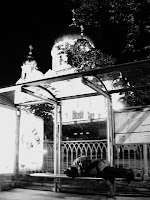
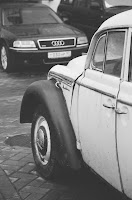


Most photographers like to focus on one kind of subject so that they can become an specialist in that area. Early on you should decide what you like to shoot, and then stick to that subject for a while. The best way to determine what photography subject is best for you is to try out each one. After you shoot everything from people to pets you will have a best idea of what you want to focus on.
Now that you know what photo subjects interest you, head out and find scenes that suit your needs. If you are going to focus on scenery photography you should be able to find much work by simply stepping out of your home. Does it get any easier than that? People who like to shoot subjects such as people and pets may find it a bit more difficult to find subjects. But if you keep your eyes open, it is safe to say that big opportunities will become accessible.
Overall, finding photography subjects is a key to piece of luck. But before you do this, make sure you know what you are looking for. Once you have an idea of what photo subject are better for you, you can then begin to scour the field for the perfect set up.


Subscribe to:
Comments (Atom)